From identity to release
Why can the invoice and carton counts differ?
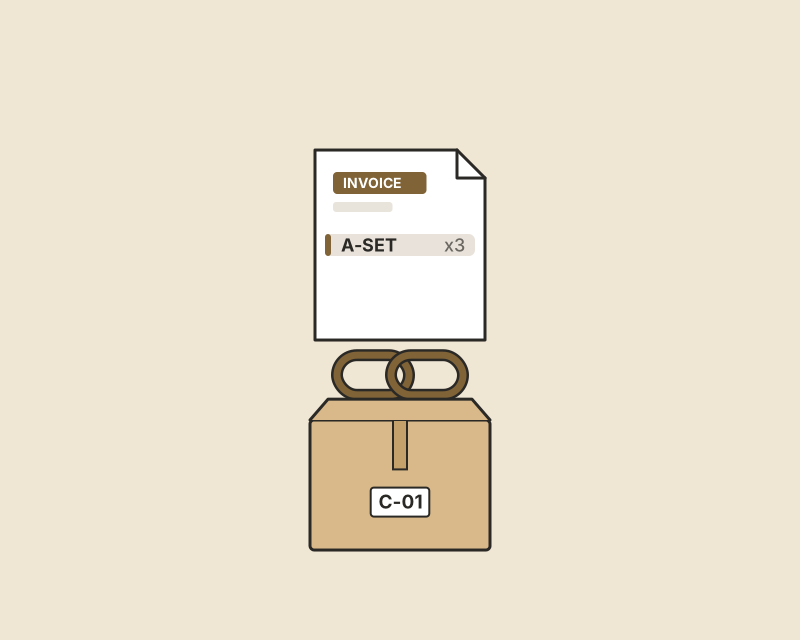
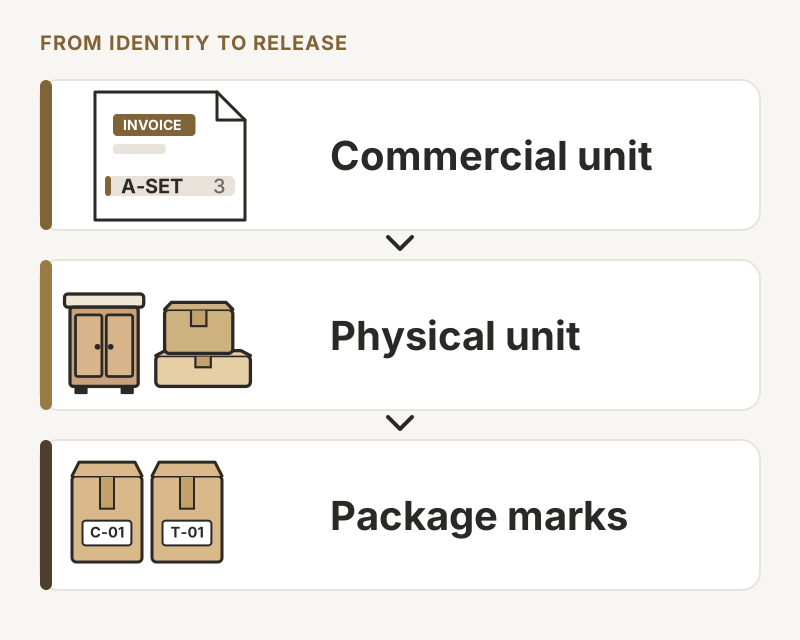
The commercial record describes what was sold. The packing record describes how the goods were divided into packages. A kit might be sold as a single assembly while its components occupy more than one carton. Those records need a connection, not an artificial identical count.
In this proposed worksheet, keep the assembly code and sales unit on one side, and the actual components and package marks on the other. Ask the supplier to explain any line that has no physical allocation and any carton that has no commercial explanation.
| Record | What to establish |
|---|---|
| Invoice line | Agreed goods description, sales unit and quantity |
| Packing line | Identified package contents and package marks |
| Crosswalk | Which package contents belong to which commercial line |
| Open item | An unresolved mismatch with an owner and disposition |
How should the reconciliation run?
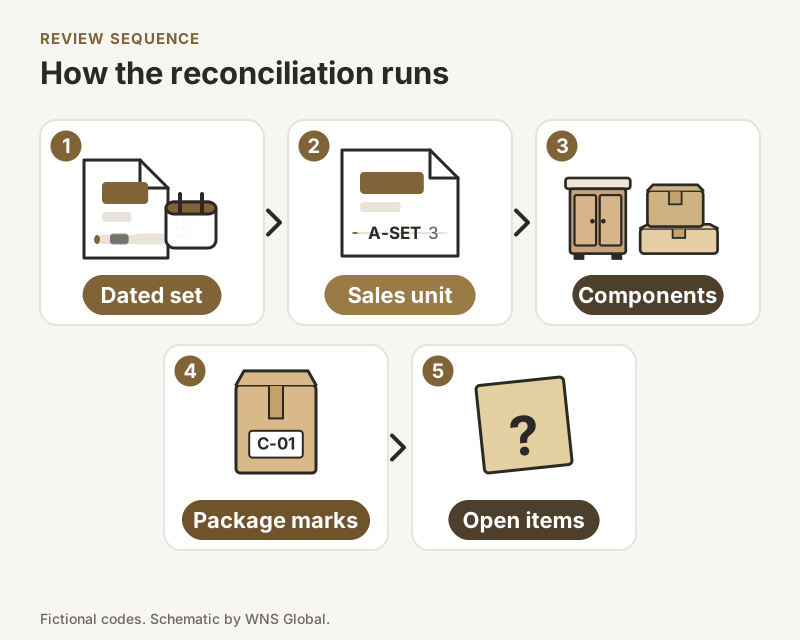
Review a dated document set that describes the intended actual shipment, including any agreed omissions or substitutions. A quotation or pro forma from the order stage may not describe the final packed allocation.
- Identify the current invoice and packing-list references, dates and revisions; keep older copies as superseded.
- List the commercial lines using their actual agreed unit: assembly, cabinet, basin, top, kit or other stated unit.
- Expand each assembly into the components that the order says are included. Do not infer included faucets or mirrors from a photograph.
- Map the confirmed components to package marks and record the content of mixed cartons.
- Explain shortages, split consignments, additional spares and goods supplied without a sale price with the responsible parties.
- Send the reconciled set and unresolved entry questions to the importer or broker for their review.
This is an editorial workflow. It does not authorize altering the seller’s invoice or deciding the customs value. A discrepancy remains open until the party responsible for that document issues an appropriate correction or explanation.
What does the US invoice rule actually ask for?
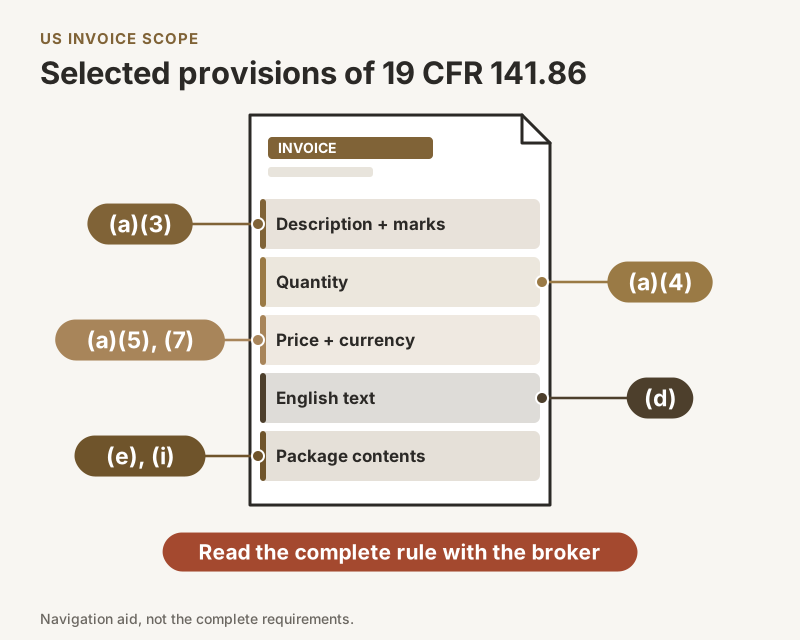
19 CFR 141.86 covers invoice information, including descriptions and quantities, purchase information, origin and package detail. It also allows required information on an invoice attachment. This short table is a navigation aid, not the complete requirements.
| Provision | Limited relevance to this review |
|---|---|
| 141.86(a)(3) | Detailed merchandise description and identifying package marks. |
| 141.86(a)(4) | Quantities and their stated measures. |
| 141.86(a)(5) and (7) | Purchase price where relevant and currency information. |
| 141.86(d) | English text or an adequate English translation. |
| 141.86(e) and (i) | Package contents and information on the invoice or attached to it. |
Read the complete rule with the broker. This page does not reproduce all requirements, exceptions or additional merchandise provisions, and it does not say a separate spreadsheet alone satisfies them.
How does a separately packed vanity assembly reconcile?
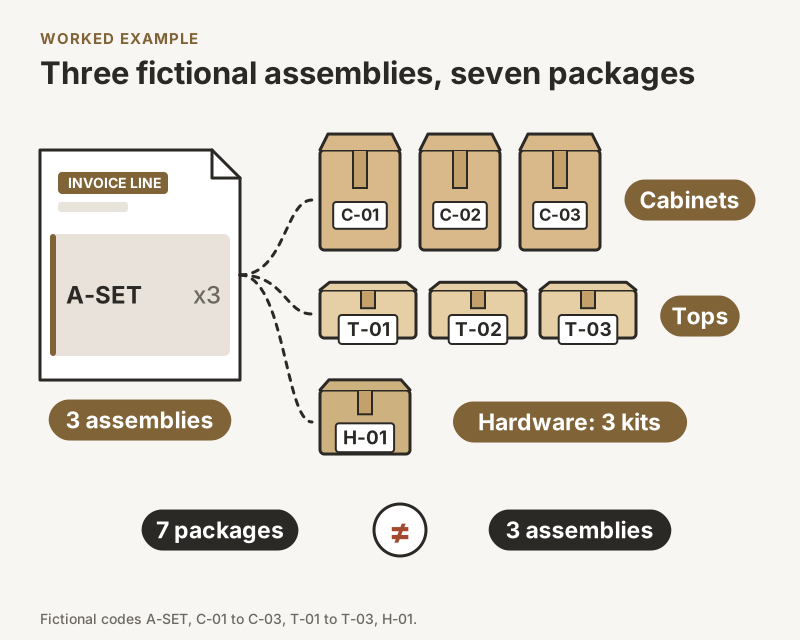
The example represents three fictional assembly units, not a quotation or a customs declaration. The packing method here is illustrative, not a recommendation for protecting real goods.
Swipe or use the arrow keys to see review result.
| Commercial line | Component quantity | Package allocation | Review result |
|---|---|---|---|
| A-SET: 3 assemblies | 3 cabinets | C-01, C-02, C-03 | Cabinet allocation accounted for |
| Same A-SET line | 3 tops | T-01, T-02, T-03 | Separate top packages accounted for |
| Same A-SET line | 3 agreed hardware kits | H-01 contains 3 kits | Mixed allocation explained |
| No extra assembly line | 0 additional complete assemblies | 7 total packages | Packages do not equal assemblies |
The agreed invoice line still represents three assemblies. If a component is omitted from one assembly, the file needs to explain the actual shipped scope; calling the carton count an assembly count would conceal that difference.
How do you describe cartons containing several items?
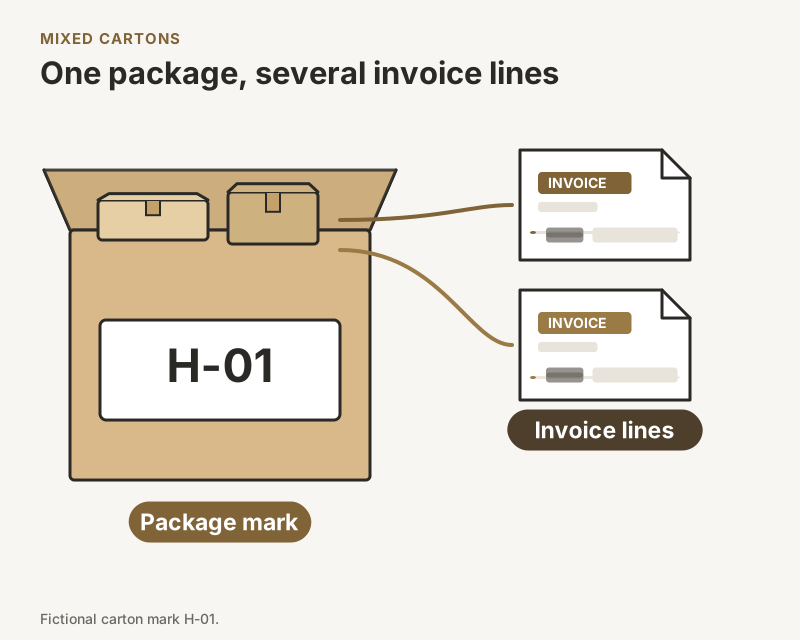
A carton total is not enough when cartons contain different products or several commercial lines.
Give each package a stable mark
Use the package mark that the actual packing team can identify. Avoid creating a spreadsheet code that has no link to the physical package.
Record contents at an actionable level
Link the product or component references and quantities inside the package to the relevant invoice lines. Identify variant or handing differences where they matter to the recipient.
Keep contents and weights distinct
The product quantity answers what is inside. Package weight and dimensions serve other purposes; they should not replace a contents record. Confirm the weight basis rather than mixing gross and net entries.
- Ask for the mixed-carton contents record.
- Check the commercial allocation for every component.
- Keep unidentified packages on the discrepancy list.
What about spare parts and partial shipments?
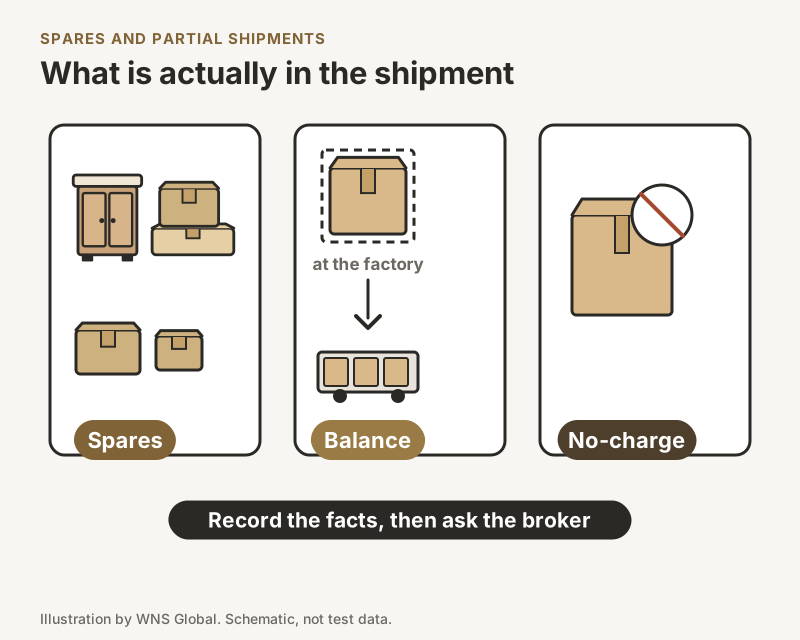
The physical shipment must explain what is present even when the order or quotation covers a larger scope.
Identify spares separately
Record the spare part reference and quantity rather than hiding extra components inside the main assembly count. Whether they require a separate invoice line or other treatment is a broker question.
Separate order balance from shipped quantity
Keep the unshipped balance in the order record. The current packing allocation should not list goods that remain at the factory as if they were inside the container.
Escalate non-sale goods
Replacement, warranty or no-charge goods still need appropriate documentary and valuation review. This guide does not prescribe a zero customs value.
Record the facts before asking for the correct entry treatment. Do not make the paperwork appear consistent by removing real goods from the packing record.
Which fields make the join auditable?
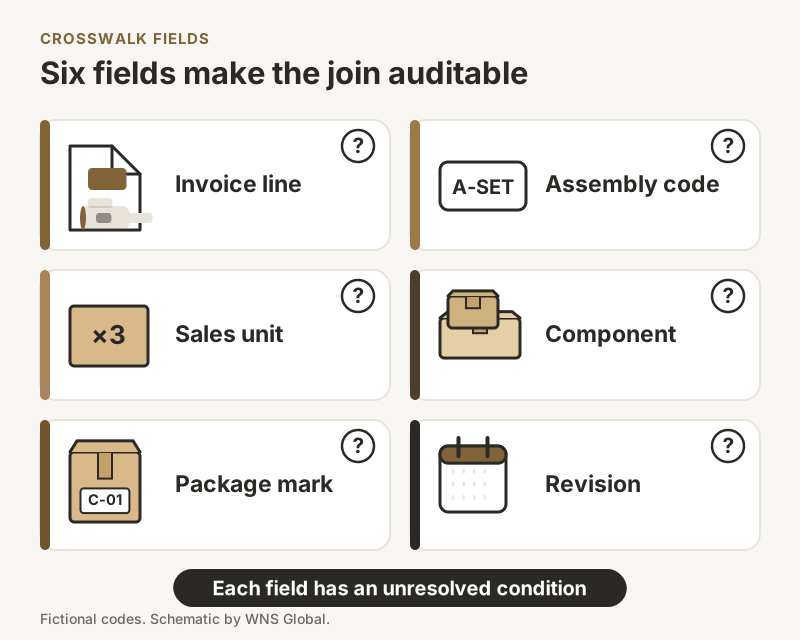
Use a record that lets another person reproduce the allocation. The following fields are this guide’s suggested minimum working structure, not a prescribed government form.
Swipe or use the arrow keys to see unresolved condition.
| Field | Purpose | Unresolved condition |
|---|---|---|
| Invoice reference and line | Find the commercial description | Line reference missing |
| Product or assembly code | Connect the agreed scope | Code differs without explanation |
| Commercial unit and quantity | Retain the sales basis | Unit meaning not defined |
| Component and quantity | Explain separately packed scope | Component missing or extra |
| Package mark | Locate the goods physically | Package contents unidentified |
| Revision and reviewer | Identify the current reviewed set | Conflicting current copies |
How do you handle a discrepancy without concealing it?
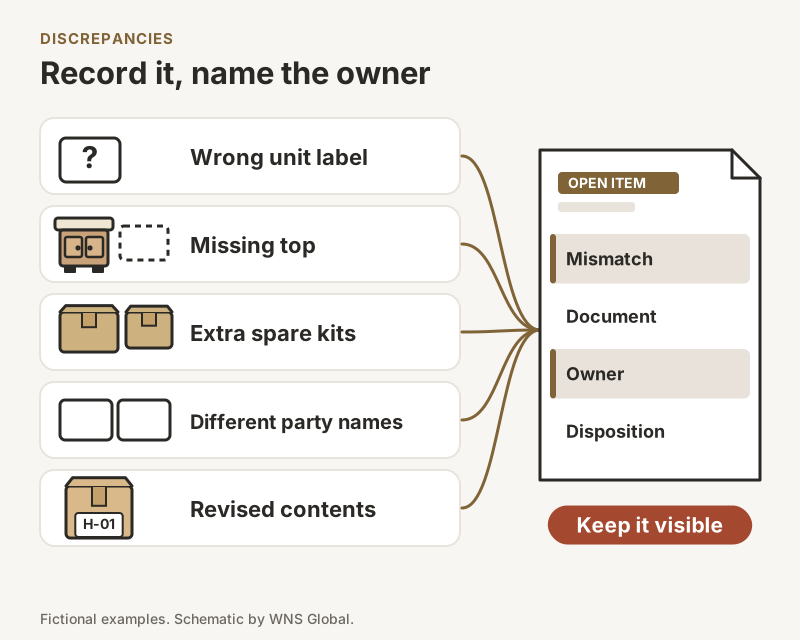
Record what does not reconcile, the document affected and the party responsible for answering it.
- Wrong unit label Ask the issuer to confirm and correct the actual commercial unit; keep the earlier document.
- Missing top allocation Request the real package allocation or confirm the top is excluded from this shipment.
- Extra spare kits Explain their scope and ask the broker about their documentary treatment.
- Different party names Establish the roles of seller, exporter and manufacturer; do not force different legitimate entities into one name.
- Revised contents after loading plan changes Replace the affected package allocation and make the current document revision explicit.
Record the disposition
Keep the original observation, the issuer’s correction, the reviewer and the date together. An accepted explanation should say why the mismatch arose, not merely mark it done.
What should the broker receive for this review?
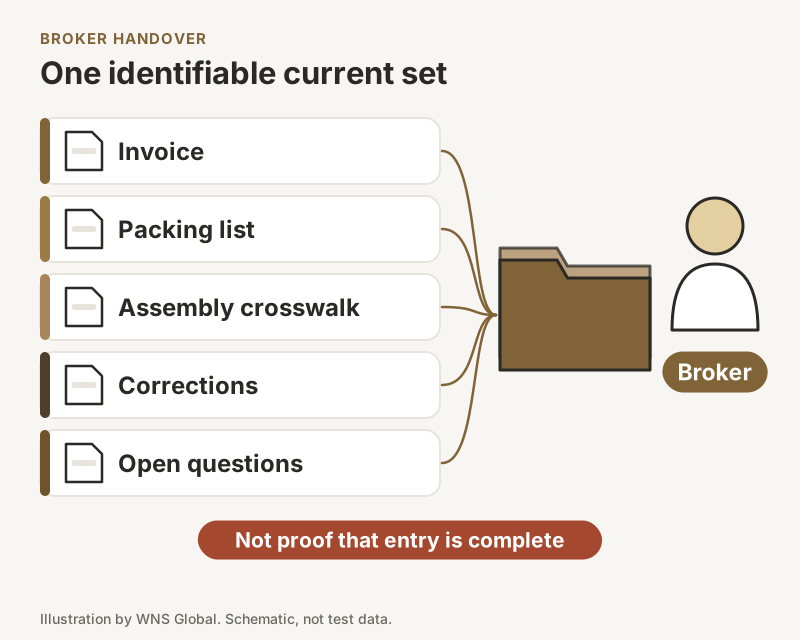
Send one identifiable current set with its reconciliation record and the unresolved questions. This is a coordination handover, not proof that entry is complete.
| Reference | Record to hand over |
|---|---|
| Invoice | Current issuer document and any referenced attachments |
| Packing list | Actual package marks and identified contents |
| Assembly crosswalk | Commercial units connected to components and packages |
| Corrections | Superseded reference and the current explanation |
| Open questions | Valuation, classification, origin or other entry treatment to confirm |
Before you close the file
- All physical packages have identified contents.
- Commercial and component units are stated explicitly.
- Partial quantities and spares are explained.
- The importer/broker has the current references.
WNS Global can review a proposed supply scope separately in writing. This page does not promise preparation of every import document, broker services, a particular customs treatment or clearance.