From identity to release
What population does the record actually describe?
Ask the supplier to define what its lot reference covers: model, configuration, quantity, time or other relevant production grouping. A code by itself is not an explanation.
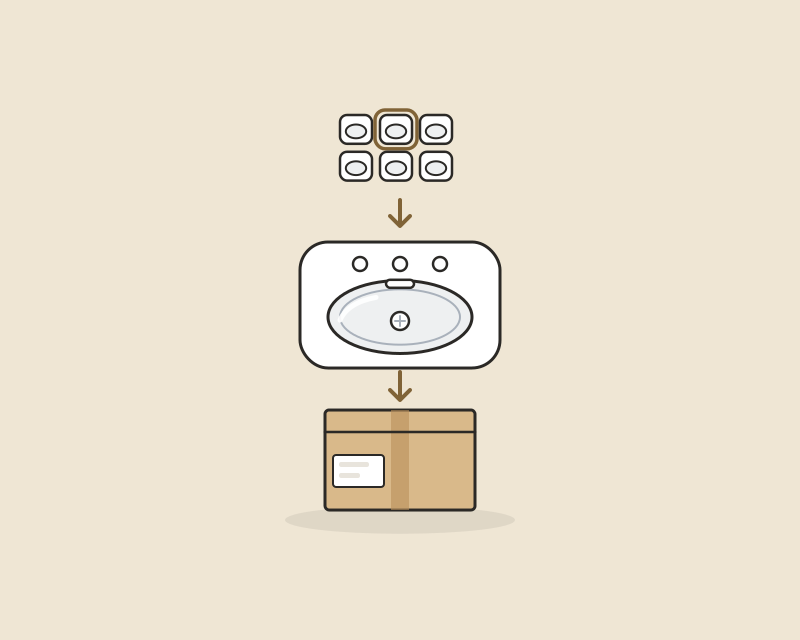
ASQ’s Quality Glossary describes a lot in terms of a defined product quantity under conditions treated as uniform. Use that concept to ask about the scope of the evidence; do not assume every basin of one model belongs to one interchangeable lot.
| Record | What to establish |
|---|---|
| Model | Identify the basin being supplied |
| Configuration | Hole arrangement, overflow and other agreed variants |
| Lot reference | Supplier-defined grouping and quantity |
| Evidence scope | Which inspected units and records belong to it |
How do you request a record that can be checked?
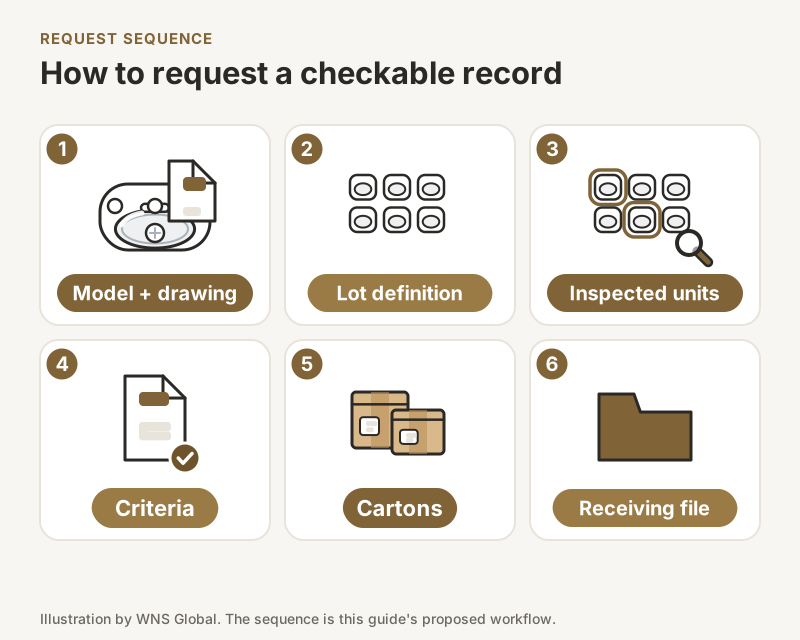
Start with the approved configuration and ask the supplier to explain its actual record system. Avoid imposing an invented code scheme that the packing team cannot trace.
- Name the basin model and the drawing or specification revision approved for the order.
- Request the supplier’s lot definition and identify the quantities proposed for your shipment.
- Ask how inspection records identify the inspected units, the lot and the checking date.
- Check the results against the agreed criteria and record any holds, rework or separate disposition.
- Ask which cartons contain the released quantity and whether lots are mixed in the shipment.
- Keep the final release and packing references with the receiving documents.
The sequence is this guide’s proposed workflow. If the supplier cannot make a documentary connection, record that evidence gap and decide the next inspection step rather than inventing a connection yourself.
Which basin differences need explicit references?
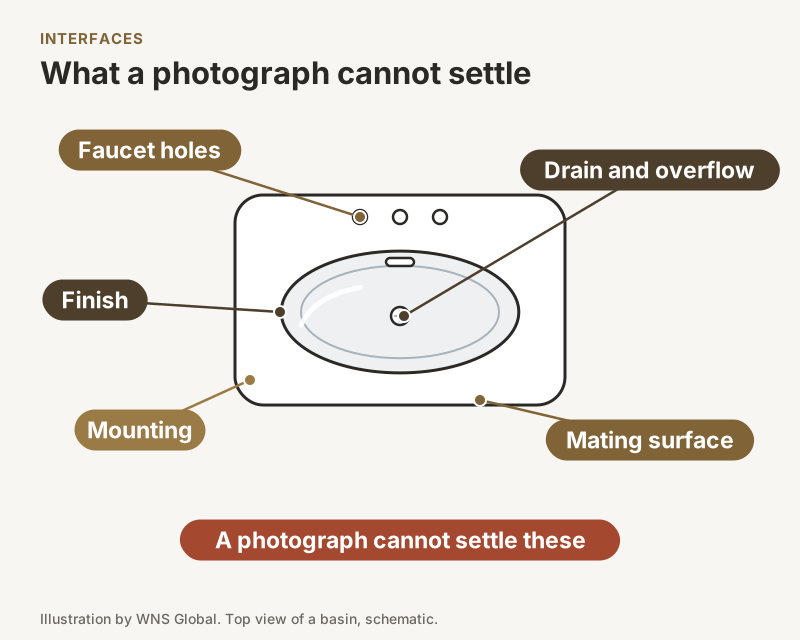
A model name may describe a range rather than the exact variant being purchased. Confirm the relevant interfaces on the approved record before judging whether a report or inspection belongs to it.
Swipe or use the arrow keys to see what a photograph cannot settle.
| Interface | Record to compare | What a photograph cannot settle |
|---|---|---|
| Faucet holes | Approved quantity and arrangement | Exact dimensions and tolerances |
| Drain and overflow | Approved outlet/overflow configuration | Fit with the selected waste fitting |
| Mounting | Installation interface and agreed support details | Project attachment design |
| Mating surface | Approved top/cabinet interface | Fit against the actual mating part |
| Finish | Agreed finish/sample reference | Permitted variation for the whole lot |
These are suggested buyer comparison fields. Their tolerances, dimensions and required checks must come from the approved specification and applicable requirements, not from this article.
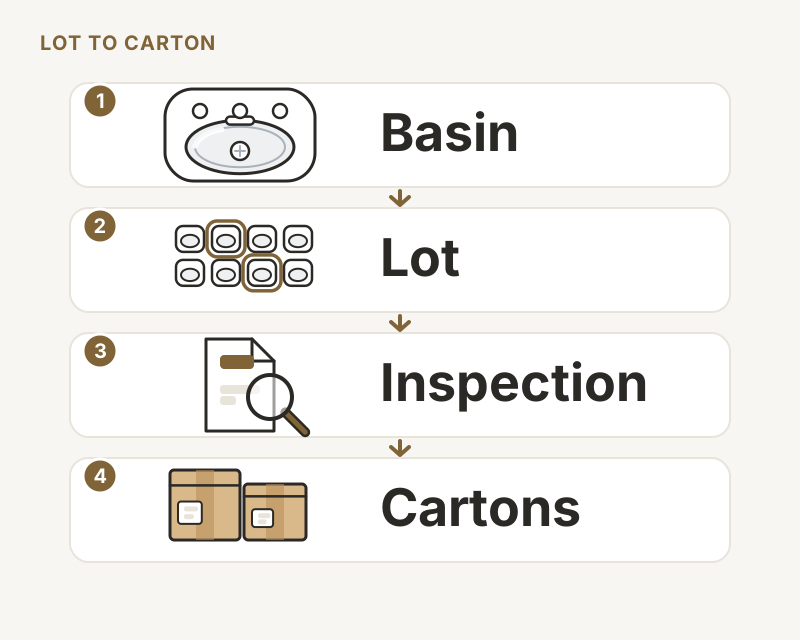
What does a useful lot-to-carton record look like?
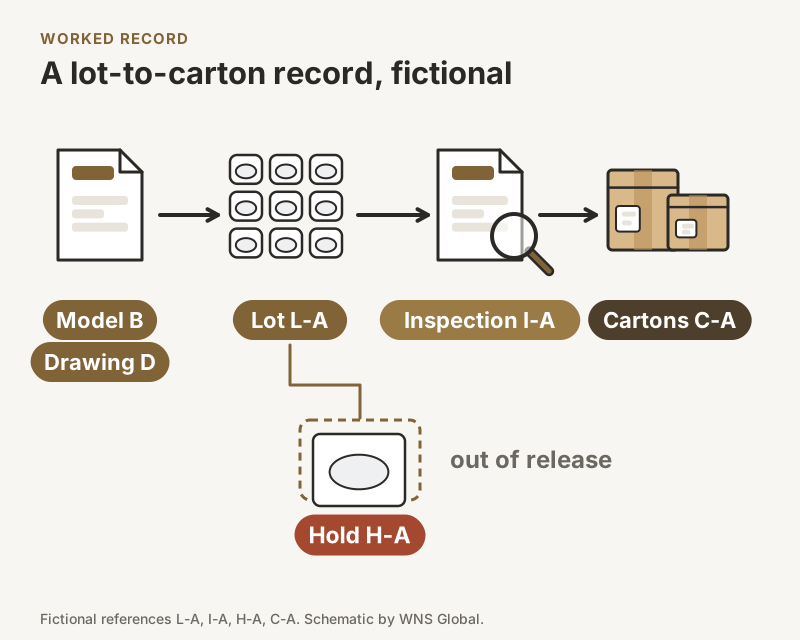
The following fictional example illustrates identity and state only. It sets no defect limit, sample size or required release quantity.
Swipe or use the arrow keys to see question to close.
| Reference | Illustrative record | Question to close |
|---|---|---|
| Model B / drawing D | Approved basin configuration | Does inspection cite this revision? |
| Lot L-A | Defined population and quantity recorded | Which units were inspected? |
| Inspection I-A | Results and checking method recorded | Were the agreed criteria used? |
| Hold H-A | Unresolved units separately identified | Have they been kept out of release? |
| Cartons C-A | Released allocation refers to lot L-A | Do the physical marks match? |
If a held unit is later reworked and released, add its disposition reference to the allocation. Do not erase the hold from the earlier inspection record or silently count the unit as having passed the original check.
Which inspection details make a result meaningful?
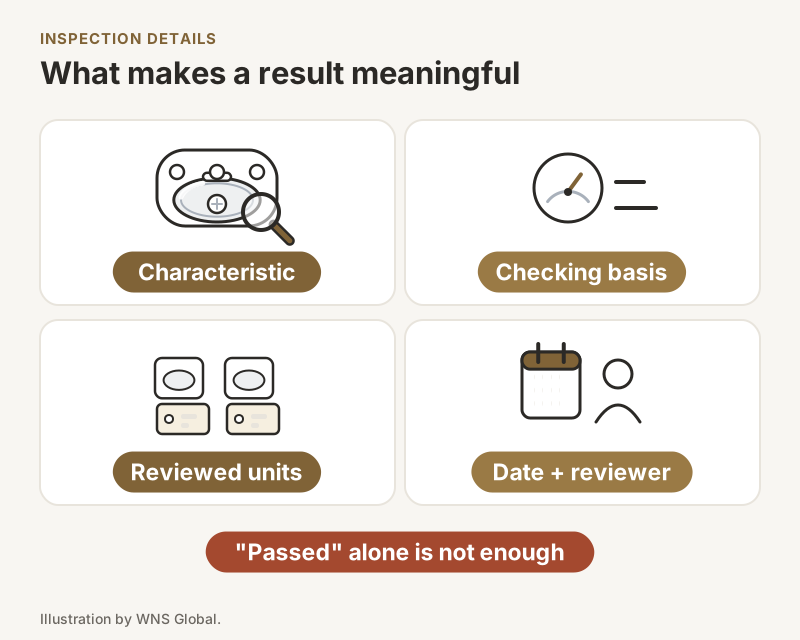
The word passed gives a conclusion without the information needed to interpret it.
Name the characteristic
Record what was checked: appearance, a specified interface or another agreed characteristic. Use the applicable drawing/criterion reference.
Name the checking basis
Identify the method and equipment or fixture as appropriate to the characteristic. A comparison photo and a measured result are different evidence.
Identify the reviewed units
State which units or sample identifiers belong to the inspection and how they relate to the lot. Keep unrelated showroom samples outside that claim.
- Keep inspection date and reviewer visible.
- Retain measurements where the agreed check requires them.
- Record the actual criterion instead of substituting a generic QC label.
What can a sampled inspection say about the rest of the lot?
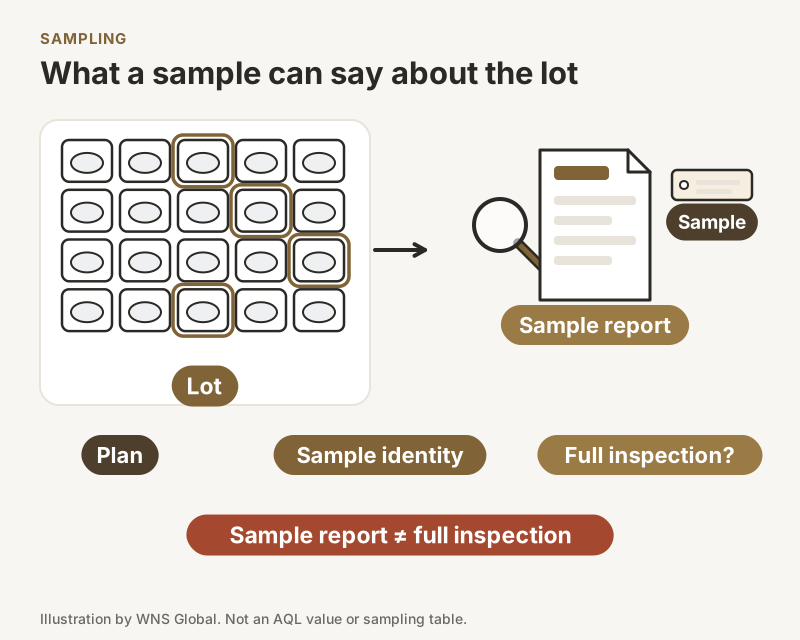
The result needs to be read with the agreed inspection plan and the lot definition.
Identify the plan
ASQ describes acceptance sampling as examining a sample to decide about a lot. Ask what sampling plan and decision rule the parties actually agreed.
Preserve the sample identity
A result from an unidentifiable sample cannot demonstrate that the agreed selection was taken from the shipment lot. Record selection and scope rather than assuming them.
Keep a full-inspection claim separate
If the supplier says all units were checked, ask which characteristic was checked and how the individual or population records support that statement. Do not upgrade a sample report to a full inspection.
This page gives no AQL value, sampling table or guarantee that unsampled units are defect-free. Use the agreed plan and qualified inspection advice for the actual order.
How do production QC, certificates and laboratory reports differ?
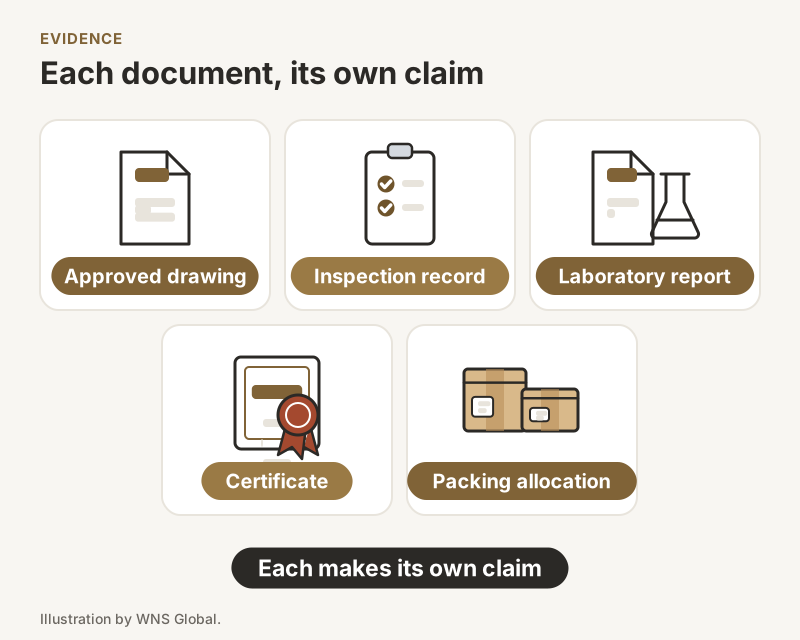
Read each document for the claim it actually makes. The existing product-certificate guide handles certification scope; this table focuses on connecting production evidence to the shipment.
Swipe or use the arrow keys to see limit for this shipment.
| Evidence | Useful question | Limit for this shipment |
|---|---|---|
| Approved drawing/sample | What configuration was agreed? | Does not identify every production unit. |
| Production inspection record | What was checked on identified units? | Does not automatically confer certification. |
| Laboratory report | What sample and method are named? | May not describe the shipped lot. |
| Product certificate/listing | What holder/model/scope is covered? | Does not substitute for lot allocation. |
| Packing allocation | Where are the released goods? | Does not establish test performance. |
How do you keep holds and mixed lots visible?
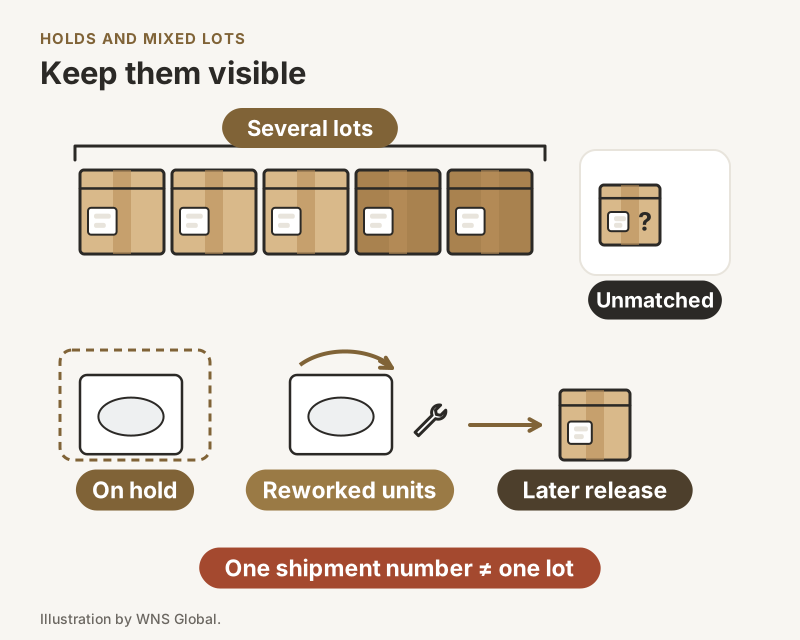
Do not treat one shipment number as proof of a single production population. Ask the supplier to explain its actual allocation.
- Several lots in one shipment Identify each lot’s carton allocation and the inspection reference applicable to it.
- Units on hold Keep their identity and quantity out of the released allocation until the recorded disposition closes.
- Reworked units Link the corrective action and agreed recheck to their later release.
- Substituted configuration Request a documented approval decision and revised reference before release.
- Unmatched cartons Keep the connection open until packing marks and released contents can be reconciled.
Record the disposition
Record the observed mismatch, responsible party, disposition and effect on the released quantity. This keeps the receiving team from having to guess whether an unexplained difference is acceptable.
What should travel with the receiving file?
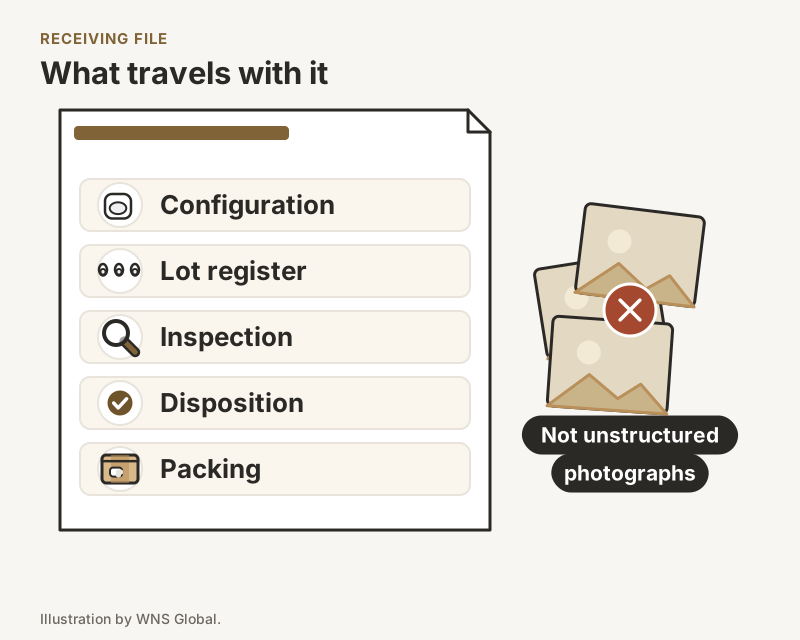
Hand over a concise index to the agreed evidence, not an unstructured collection of factory photographs.
| Reference | Record to hand over |
|---|---|
| Configuration | Approved model/drawing/finish references |
| Lot register | Definition and proposed/released quantities |
| Inspection | Sample or unit identities, criteria and results |
| Disposition | Holds, rework and release decisions |
| Packing | Carton allocation with the actual package marks |
Before you close the file
- The inspected configuration matches the order.
- Each release has the relevant inspection reference.
- Holds remain separately visible.
- Cartons can be traced to their released allocation.
Ask WNS Global to confirm the actual supply source and evidence it can provide for the proposed basin order. This article makes no claim of an owned ceramic production line, accredited laboratory, certification or guaranteed inspection service.